


Overture: Starless and the Signal Within
Sundown dazzling day
Gold through my eyes
But my eyes turned within only see
Starless and bible black1
— King Crimson, Starless
August 1st, 6:48 a.m.
I get in my 2015 Nissan Altima, back out of the driveway, and for the first time in 31 days, I do something familiar: I plug my aux cable into my phone, and I press play.
The car hums down the quiet morning road.
Fripp’s mellotron enters like a sigh from the abyss. Wetton’s voice follows, haunting and lamenting the death of old relationships. Then Mel Collins’ saxophone begins to trace the edges of something I can’t name. Time slips sideways.
It’s the first piece of content I’ve let in for over a month, and it hits like a reckoning.
I don’t reach for my phone. I don’t skip to the crescendo. I sit with the tension, note by note, ache by ache.
And then… halfway through, Bruford arrives. Not with bombast, but with precision. Percussion like muscle memory returning to a body that thought it had forgotten how to move.
Even though I’ve heard this song a thousand times, it reminds me what music can do.
What presence can hold.
What I was missing all those times I used content to drown silence, instead of letting it teach me.
A gentle reminder of the beauty of impermanence.
This was the first time I let content hit me like that. The first time I didn’t use it to escape.
I wasn’t chasing the dragon anymore. I was learning how to feel again.
Starless by King Crimson is more to me than a favorite track or a drink with an old friend, it’s about the death of identities, comfort loops, and parasocial ghosts.
On that August morning, I wasn’t chasing the dragon. I was learning how to feel again.
Naming the Dragon: The Myth of “More”
Reality is for people who can’t face drugs.2
— Tom Waits
Boredom is a hell of a drug.
In a modern world, replete with distractions, there’s always something to consume. No matter where I turn, there is always something that demands my attention. I don’t understand how anyone can say that they’re bored, when the average person never takes their eyes off their phones. I can’t judge—that was my life since I got my first smartphone. So, in this sense of the word, boredom equates with escaping into the internet and the world of content. We’ve forgotten what it means to be genuinely bored—to sit and stare at the sky or the ocean; to just sit contentedly with our thoughts.
To “Chase the Dragon” refers to the dangerous act of using heroin or pursuing an unattainable goal.3 In drug parlance, “chase the dragon” refers to the act of using heroin by heating it on a foil and inhaling its vapor through a straw or tube. This term has extended metaphorically to depict someone relentlessly pursuing an unattainable goal. In both contexts, it denotes dangerous and potentially destructive behavior. However, in the context of this article, I use the term loosely for chasing content, content addiction, and always needing to be in a state of content consumption. The advent of addictive tech has become the dragon we chase to avoid boredom.
I deliberately chose the heroin angle to give credit to the author who showed me the addictions of modern technology. In Chapter 2 of Irresistible, The Addict in All of Us, Adam Alter explains how American soldiers became addicted to heroin during the Vietnam conflict. Alter argues in Irresistible that “boredom is the natural enemy of good behavior, and not everyone took to wholesome, all-American past times.”4 So, what was the catalyst that inspired these soldiers to chase the dragon? Boredom and proximity:
Vietnam lies outside a region of Southeast Asia known as the Golden Triangle. This region encompasses Myanmar, Laos, and Thailand, and was responsible for most of the world’s heroin supply during the Vietnam War…
… In interviews, 85 percent of the returning G.I.s said they had been offered heroin. One soldier was offered heroin as he disembarked from the plane that brought him to Vietnam. The salesman, a heroin-addled soldier returning home from the war, asked only for a sample of urine so he could convince the U.S. authorities that he was clean.
Few of these soldiers had been within a mile of heroin before joining the army. They arrived healthy and determined to fight, but now they were developing addictions to some of the strongest stuff on the planet.5
What’s fascinating about this story is that once the soldiers returned home, nearly all of them kicked their heroin habit. This is the one of the most addictive chemicals on the planet, and yet 19 out of every 20 soldiers that chased the dragon got clean once returning home. What was the catalyst for kicking the habit? Environment. They no longer had cheap, easy access to heroin.
This angle with chasing the dragon presents a fascinating debate: are people genetically hard-wired for addiction, or is it simply a matter of suggestibility, environment, or other such factors. Alter continues, “For decades, experts had assumed that drug addicts—laudanum lushes, poppy tea drinkers, and opiate addicts—were predisposed to the condition, somehow wired incorrectly. Olds and Milner were some of the first researchers to turn that idea on its head—to suggest that, perhaps, under the right circumstances, we could all become addicts.”6 We no longer need fancy narcotics to become addicted. Alter’s thesis of Irresistible is that companies have manufactured smart tech—smartphones, apps, and social media platforms—to be as addictive as hard drugs, and far easier to access.
I can honestly say from my four decades on this planet, I’ve never done a hard drug in my life. I didn’t drink until college and never experimented with needle drugs. The most addictive white powder I’ve consumed is sugar. So, I’m not the most qualified to discuss drug addiction. But content addiction—that’s a different beast.
Later in the article, I’ll discuss mindless consumption and being “cracked out” on content. With all this drug talk, I should briefly define the parameters of chasing the dragon: “Addictive behaviors have existed for a long time, but in recent decades they’ve become more common, harder to resist, and more mainstream. These new addictions don’t involve the ingestion of a substance. They don’t directly introduce chemicals into your system, but they produce the same effects because they’re compelling and well designed. Some, like gambling and exercise, are old; others, like binge-viewing and smartphone use, are relatively new. But they’ve all become more progressively more difficult to resist.”7 As Alter argues, thanks to the ubiquity of smart technology, you don’t need leaves, fermented fruit, or white powders to be addicted. Even the simple act of reading books on your smartphone can become an addiction.
Aside from Alter, the inspiration from this article came from Alan Jacobs’ treatise, The Pleasures of Reading in the Age of Distraction. One of the more thought-provoking questions Jacobs asked was why do people return to the same books when they know how they end? Since I was on a “content Sabbatical,” I reframed this question not just to pertain to books, but all media. July 2025 was the perfect time to read this book: a moratorium from content consumption afforded me the mental bandwidth to explore these questions. Since I wasn’t distracted by daily content consumption, I could pause and reflect on the role of technology and content in my life without distraction.
Why do I read all these damn books—is it really for content, boredom, or research? Why do I revisit the same shows, movies, and anime repeatedly? I’ll begin with my answer and give Jacobs’ answer in the next section. The truth is, I rarely revisit books. I’ve read many books twice, but usually for citations or research purposes. I’ve read UNSCRIPTED by MJ DeMarco at least 20 times, but not always for entrepreneurial advice. It fit my worldview at the time, and I enjoyed the snarky tone in which it was written. I also owe a debt of gratitude because it taught me the term ‘hyperreality,’ which has become the basis of the “Sleepwalkers” motif that I’ve introduced in my writings.
To answer these questions—why do I revisit the same comfort content year and why do I mindlessly consume content to fill my time—first I must explain my relationship with content. I will also explain the role it plays as inspiration as a writer and editor, and why I passively consumed content for nearly four decades, and why one faithful summer month, I stopped.
Ghosts In The Feed (Rewatch, Revisit, Repeat)
The book that simply demands to be read, for no good reason, is asking us to change our lives by putting aside what we usually think of as good reasons. It’s asking us to stop calculating. It’s asking us to do something for the plain old delight and interest of it, not because we can justify its place on the mental spreadsheet or accounting ledger… by which we tote up the value of our actions.8
— Alan Jacobs., The Pleasures of Reading in and Age of Distraction
After spending a month reading only books, I concluded that I’ve used content as a means of “chasing the dragon,” filling my time with mindless content, when I should’ve been reading, writing, and pressing “publish” sooner. This article serves as a declaration of that goal.
Before I was addicted to anime, I was addicted to movies. Before I was addicted to movies, I was addicted to TV shows. My earliest television addictions were cartoons, many of which I still watch to this day. As a result, I trained myself to fall asleep with the television on—a disgusting habit, but a welcome one. Taking a month off content consumption made falling asleep—and staying asleep—a challenge.
Because of my relationship with content, I have a rotating list of “comfort” shows and movies. When I went back to college and took an Intro to film class, I deluded myself into thinking I wanted to go the University of Southern California Film School to become a screenwriter. Because of the student loan crisis, I’m glad I shelved these plans. Turns out, not even Lori Laughlin could’ve gotten me into USC! Regardless, thanks to that class, I fancied myself as a sort of auteur who didn’t just watch films, but studied them. Film became an obsession. For many years, I had annual “baseball movie” marathons at the completion of spring training. I rewatch Die Hard with my family every Christmas, selfishly hoping this will be the year of Hans Gruber. I constantly quote films such as Blazing Saddles; Grandma’s Boy; Rounders; Glengarry Glen Ross; Planes, Trains, and Automobiles; and Uncle Buck in casual conversation. These films earned a literal and metaphorical place on my shelf. Turns out, I was more of a bored autist than an auteur!
My brother and I inherited this behavior from our mom, proving that environment can make an addict out of you. She has her comfort shows and movies: Big Bang Theory, Friends, Top Gun, National Treasure to name a few. I used to joke with her that she ground her DVD copy of Hitch down to dust. My brother probably watched Toy Story on VHS no less than a hundred times as a baby and toddler. I can’t judge them though, as I spent decades using content to avoid silence.
Certainly Seinfeld, The Simpsons, South Park, and Twilight Zone are my comfort shows, as their citations are ubiquitous in my writing. I’ve seen the film Heat at least 20 times, almost as many times as I’ve seen Spice World. Not that I need to defend my tastes, but that film is funnier than anything stand-up “comedians” have written in the last decade. I, like many others, watch the annual Twilight Zone marathon either on New Year’s Day or the 4th of July. Another popular example is the Mystery Science Theater 3000 “Halfway to Turkey Day 4th of July Marathon” on YouTube. The internet and streaming sites have made constant watching, re-watching, and binging content not only possible, but commonplace. Thanks to AutoNext, AutoPlay, and AutoSkip features on streaming sites, you can string together hours of interruption-free entertainment without changing channels or discs. The hits keep comin’…
A new addiction—anime—was met with a classic compulsion: annual rewatches. I’ve watched the original Dragon Ball, Dragon Ball Z, Inuyasha, and Case Closed episodes countless times thanks to Funimation and Cartoon Network, but since my anime journey is still only a handful of years old, I’m not as far along with rewatching those. Many fans rewatch Toradora every year at Christmas time. I’ve watched the series three times now, and while it’s incredible, I don’t receive any comfort in the annual revisit. If anything, the emotionality bleeds into the Twilight Zone marathon and any new anime I wish to start in the new year. I learn a bit more about the characters, I feel for them in the heavy emotional scenes, but it’s not always a pleasurable rewatch. In some instances, I think anime fans are incredibly masochistic based on their choice of rankings and rewatches. However, this creates a new wrinkle in my thesis: if rewatches are uncomfortable, are people rewatching shows just because of environment (holiday-themed; family pressures) as well? Perhaps this is another hint at addiction: we’re engaging in a habit we talk little solace in, but it’s there, so we must imbibe.
As I dive deeper down the anime rabbit hole, I hope that the positive emotions I experienced at first watch remain present. However, the law of diminishing returns tells me otherwise. To compound this, some titles make revisits nearly impossible, as many of them are several hundred episodes in length. That doesn’t even take manga into account, despite purists’ claim that manga is always better than anime. There are thousands of anime that I’ll never see, and sometimes that fills me with malaise or urgency to watch more. However, there are a handful of anime that I’ll watch and rewatch a handful of times or more because of their emotional impact on my life. And to me, that’s more important. This understanding marks the beginning of my transition from shallow consumption to deep exploration.
One more former addiction to explore with this lens: Video games. I used to love video games, but as I got older, I had less free time to commit to them. As a tween and teen, I used to race on my bike to Mammoth Video and Blockbuster to rent the newest games and lose hours in them. As an adult, I’m so far removed from the gaming scene, it no longer has this hold on me. In recent years, my video game replays felt like just empty consumption. Gaming became something I did to kill time while consuming podcasts and content on YouTube. With smartphones came the advent of mobile game and new form of addiction in microtransactions. I dumped thousands of hours into a handful of mobile games, but growing up broke was a blessing in that I couldn’t justify spending hard-earned money on microtransactions. After reading Alter’s Irresistible, I’m also grateful that I never became hooked on MMORPGs such as World of Warcraft.
I remember the primary reason I bought a new laptop during COVID was to re-play one of my all-time favorite games: Earthbound. The primary reason I bought a large monitor (I normally write on a laptop with a 17” screen) was so that I could put videos on my monitor and play emulators on my laptop screen. After a certain year, I stopped playing most new video games altogether, choosing to just revisit the same five to ten favorites.
When I became tired of playing the same old games, I could add new wrinkles to old favorites: Rom hacks. Rom hacks, which include fan-re-translations and patches, add new layers to older games. For example, Earthbound has Mother 2 Deluxe; Final Fantasy VI has Brave New World as well as T-edition; Chrono Trigger has the Enhasa edition; and Final Fantasy VII has the New Threat mod as well as modern high-definition remakes on the newest consoles.

The world of Rom hacks reminds me of Professor Jacobs’ argument regarding re-reading old books. Once many readers finish their favorite series or read all an author’s books, they find themselves reading fan fiction attempting to find new in-roads to old familiar content. As Jacobs muses, “So, we return again and again to our favorites, striving to calculate how best to maintain the magic.”9 He continues, “So whim cannot be everything. My whim may take me to the same books always, but I am confronted by the iron-clad Law of Diminishing Returns. I simply must turn elsewhere, to seek out alternatives.10 The discussion of rom hacks and revisiting content leads us inevitably to the world of fanfiction, that is:
[S]equels or continuations of existing books written by an author’s most passionate followers. That wondrous storyteller Michael Chabon describes in an essay his response to reading, at age ten, Arthur Conan Doyle’s first short story featuring Sherlock Holmes, A Scandal in Bohemia. That response was to sit down and write his own Sherlock Holmes story. Later he read everything Conan Doyle had written about Baker Street’s most prominent sleuth, but in the long run that wasn’t sufficient: when he was around forty, he wrote his own Sherlock Holmes novel, a powerful tale called The Final Solution. It’s easy to see why Chabon believes that “all literature, highbrow or low, from the Aeneid onward, is fan fiction. That is Harold Bloom’s notion of the anxiety of influence has always rung so hollow to me… All novels are sequels, influence is bliss.”11
Was my returning to content the same as Harry Potter or Sherlock Holmes fans reading fanfiction trying to re-immerse themselves in familiar territory? It sometimes feels that way. When new content became stale, too political, or unable to hold my attention, I strayed into new mediums. I chased the dragon by re-watching comfort shows and movies annually. I sought out new favorites in old mediums, new mediums with old favorites, and “fanfiction” remakes of video games. I concluded that when I replay old games, I’m chasing the dragon to reconnect with childhood. It’s an attempt to replay those old gems of my childhood with fresh eyes. My “addiction” to video games was less about playing the latest and greatest or becoming competitive, but rather an addiction to nostalgia.
I also concluded that rewatching wasn’t comfort, it was time travel. I was moving further into the future, losing myself in content, with little to show for it. It was less about connecting with art and more about ‘consooming’ it. This led me to one of the most insidious methods of content cataloguing and consumption—the list.
Lists, Rankings, and the Tyranny of ‘Consoom’
But those who want to have read, who are checking books off their “bucket list,” will find the thought of rereading even more repulsive than the thought of reading slowly and ruminatively. And yet rereading a book can often be a more significant, dramatic, and yes, new experience than encountering an unfamiliar work.12
— Alan Jacobs., The Pleasures of Reading in and Age of Distraction
Why do we wish to speed read, listen to audiobooks at 3x speed, watch YouTube videos on or 2x speed, and binge-watch television series? Is it because we know that life is short and the wellspring of content is ever growing? Speaking only for myself, there was a time when I genuinely enjoyed sitting down to watch TV shows or a movie. There was a time when I could lose myself in a fiction book for hours. There was also a time when I could sit and play video games—whether RPG, platformers, racing games, or beat-em-ups—and lose myself in the story, music, and mechanics of the games. And then came new technology, and the battle for my attention span…
The internet and streaming sites/platforms made binging ubiquitous behavior. Before streaming became the worldwide juggernaut, TiVo and DVRs made it so we could record all our favorite TV shows and movies and watch at our leisure. In that sense, we were no longer “chained” to our devices, and it was a bit safer to venture outside and have a social life. In the VHS days, we could record our favorite shows—commercials and all—although we were also left with a choice: what do we do when two of our favorite shows are airing concurrently? Which do we watch and which do we record? To put it bluntly, the entirety of my life has seen technology move us away from living, to choosing to stay inside shackled to entertainment.
So why do we do it? Is it to stave off boredom? To always have sound playing in the background? Do we watch and listen to content because we like it or because we need to have finished it? Welcome to the danger of “consoom…”
One of my favorite definitions of “consoom” comes from UrbanDiction (AKA the only dictionary that matters—one more thing Americans did better than the Brits). User Barberousse offers this two-part definition:
1. Someone who consumes entertainment content (movies, TV, YouTube, video games, etc.) like a glutton consumes food, indiscriminately and without appreciating its intrinsic worth or lack thereof, or for whom the consumption of content becomes mechanical and compulsive.
The consoomer is distinct from the coomer, the latter being a subset of consoomer who specifically consumes pornography.
2. A feckless person who dissipates all his energies by consuming the aforementioned content in a compulsive and morbid manner. [emphasis theirs]13
So why do most people spend their days “consooming” content? Because it’s there, and we don’t want to miss out. Professor Jacobs observed this phenomenon as well:
Why do people want to read faster? Not least because life is short: “So may books, so little time,” as the saying goes. We don’t want to miss something special, especially if we miss it because we simply run out of years. This is understandable, and when such thoughts pass through my head I can feel a brief rush of panic. But—to anticipate a point to be treated later—it’s rather odd that I tend not to feel that same panic at the thought of not having time to reread books I already love, even though I know that such rereading will be pleasurable. The possible pleasure of an unread book weighs more heavily on me than the sure pleasure of one I already know…14
Why do we feel the need to mindlessly “consoom” content? Because it’s there, and if we don’t, we have this gnawing feeling in our minds that makes us think we missed out on something. The FOMO culture of the internet makes us believe that we are just one TikTok/Reel, one YouTube video, one swipe, one book, one Reddit thread, or one podcast away from nirvana. But there’s something even more insidious with the “consoom” model—it’s not enough to be present and “consoom,” there’s a cachet in having “consoom”-ed. When the latest iteration of Yellowstone or Fast and Furious 27 comes out, it’s not enough to see it; you must have seen it, so you can discuss it with friends and coworkers.
This is how I felt when compiling various content lists to consume. It wasn’t enough to be present and enjoy what the author or artist presented. It was about mindless consumption and checking a “completed” box. Being of German descent, I developed an uncanny ability to spreadsheet my hobbies and wish lists. How do you know which media to “consoom?” Simple—because it’s on our list. And how does it get on our list? Because it’s on someone else’s list! Fortunately for the “consoomer” other “consoom” pioneers have blazed the trails with lists. As Professor Jacobs observes:
“Consider in light the far more dreadful 1001 Books You Must Read Before You Die. Leaving aside its absolute violation of the sovereignty of Whim—given the length of the list and the brevity of life, if you enslave yourself to this tome’s tyranny, you’ll never read another word just for it—let’s just focus on the salient fact that this book is not about reading at all. 1001 Books You Must Read Before You Die is the perfect guide for those who don’t want to read, but who want to have read.”15
This is how I went from a media enjoyer to “consoomer.” I sought out recommendations and made never-ending, Brobdingnagian lists, simply because I wanted to check them off the list. I had a spreadsheet of all the films that got voted “Must See Before You Die” and set out to watch as many as I could. It didn’t matter that I didn’t want to ever watch them, I had to “consoom” them. In the interest of transparency, suspending one’s disbelief when it comes to media recommendations can be important—another great lesson from my aforementioned Intro to Film class. In trusting my list, I found several films that I enjoyed that would have otherwise gone unwatched based solely on a snap judgment. (Say, Seven Brides for Seven Brothers) However, as Jacobs argues, my goal in watching film should have been enjoyment, not completion. Yet, I approached watching film as if it was my mortal mission to finish this list. To quote the great filmmaker Orson Welles, I was “soaked in films:” “Now, of course you must see films—and you must see great films—I said don’t be marinated; don’t soak yourself in films… all the best young directors are soaked in films.”16
I did the same thing with anime. I asked a friend for a few recommendations. This then led to joining MyAnimeList (MAL) and seeking out suggestions. This then led to researching anime lists and suggestions on Reddit and YouTube. Before long, I had a spreadsheet with over 1,000 suggestions, watch lists, and columns for tallying number of recommendations. In short, I made my own 1,001 Anime J ‘Lava’ Leffel Is Attempting To “Consoom” Before the Reaper Takes Him. I turned ANOTHER pleasurable hobby into a chore and homework assignment.

It’s the same with any form of conspicuous consumption. Playing video games was once engaging for me. Then it devolved into playing video games on one monitor while having a video podcast (usually Red Bar Radio) on the second monitor. Many people binge-watch anime or live-action series on their phone or computer monitors at their day job. Once again, Alan Jacobs offers the perfect anecdote for the “consoomer” dilemma: “How the hell does one read in the internet age, let alone read without distraction? “In such an environment [laptops, hotel Wi-Fi, iPhones, social media] how is it even feasible to recommend slower reading? If we read more slowly, won’t that just mean that we get through less text before succumbing to distraction?”18 Forget about reading or watching for pleasure, how about just watching one YouTube video without checking the comments, suggested videos, or changing tabs on your phone to check a text message or missed phone call?Perhaps the problem isn’t the quantity or the quality of the content, but in the power of the distraction. The Sleepwalker paradox of “consoom” wins the day in the age of distractions. Put another way—the average “consoomer” is cracked out on content!
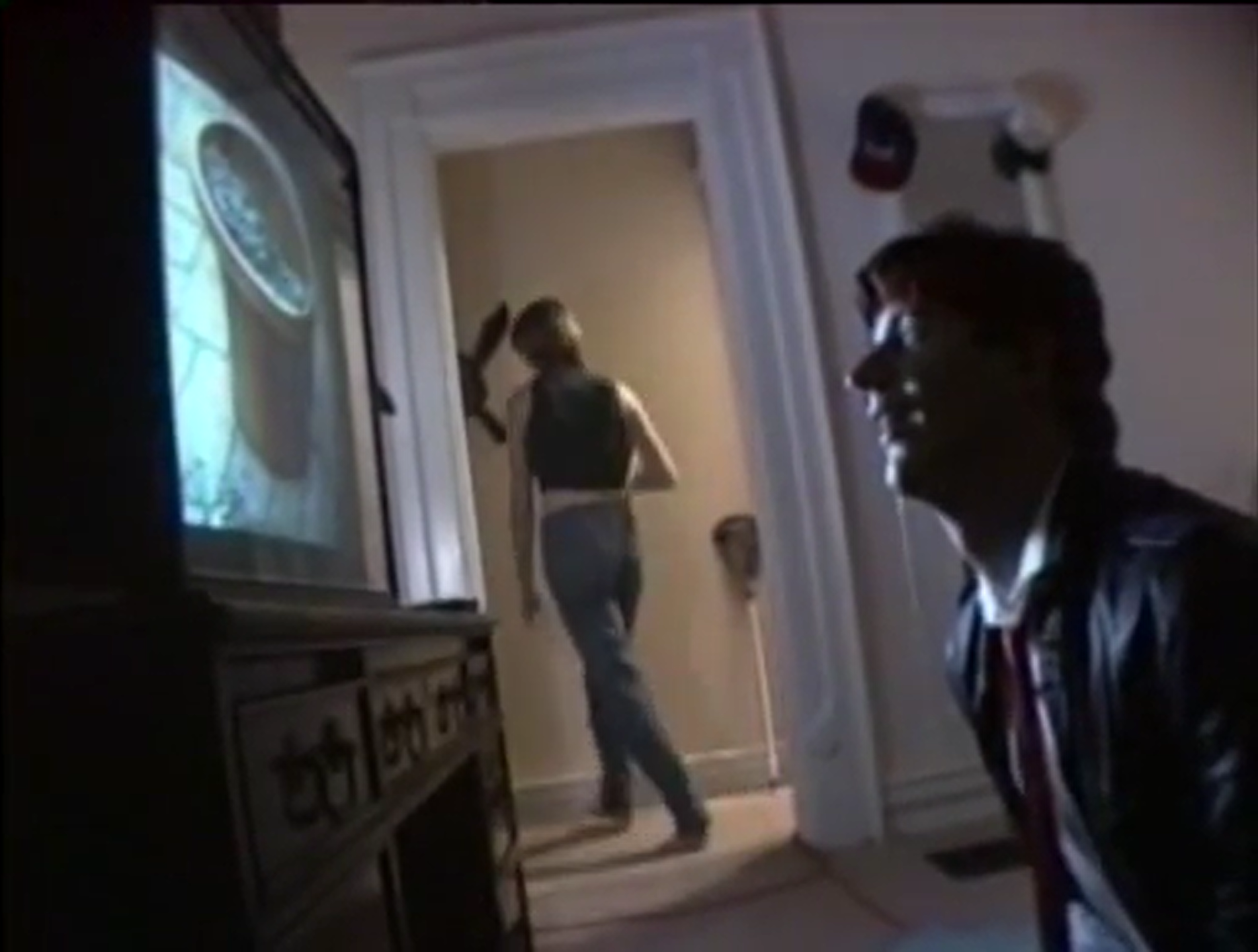
If you don’t think you can be “cracked out” on content, there’s a skit from the 1993 MTV show The State (S2. E5, entitled TV Watching) in which a young couple showcases being “cracked out:”
A wife bets her television-addicted husband that he can’t spend one night at home without watching TV. He accepts the challenge, soon realizing that without television, he’s bored out of his mind. He calls his friend to come over, but to no avail; he hassles his wife as she’s engrossed in a book; he plays with an egg beater in a sink full of water; he pretends to watch the fish tank as a television, using the remote control to mimic channel-changing; he invents several ways to annoy his wife, including but not limited to: pestering her while she reads, taping his feet with masking tape and picking up ripped newspapers off the floor, counting his toes with a magnifying glass, raw-dogging rosemary cloves from the spice rack, and entering the room nude, helicoptering his dick. Annoyed, the wife proclaims the husband won the bet, leaving the room to turn on the TV. Once on, the husband resumes his comatose, zombie-like staring at the TV, and the wife, finally having peace and quiet, returns to her reading.19

[Author Note: Forgive the quality of the image. Paramount+ doesn’t allow screengrabs, so I had to find other means. Also, an autobiographical note of interest: this episode aired on my 10th birthday on MTV.]
Over the decades of my life, I grew to treat nearly all media as background noise and binge-sessions. Media became more about distracted consumption and less about being mindful and present. Even anime, a nascent form of art-enjoyment in my life, was reduced to a compulsive behavior of cataloguing and completion. As I’ll explain later, anime has not only awakened new emotions in me, but broke me out of the “consoomer” model.
This is all well and good, but how does one fix “consoomer” culture? We don’t. Let the Sleepwalkers “consoom.” I can honestly say that setting limits helps, but there’s also an element of mindfulness that one must cultivate. For example, one question I asked myself when I eliminated content was, “what the hell do I do when I eat meals?” The answer should have been, “I don’t watch TV or read during meals.” However, this is how we live in a Sleepwalkers culture—mindless “consooming” of empty calories and hollow entertainment. We can’t fix the culture, but we can fix how we approach media consumption. Before that, we must first acknowledge that we have a problem. Before I explain my process of what worked, I must explain what didn’t work. No matter how you slice it, once I removed content consumption from my life, there was still one major issue to tackle: consumption under the guise of knowledge.
When Knowledge Becomes Another Drug
This self-help, self-improvement model of reading seems deeply embedded in American cultural life…
…[t]hey suggest that reading is best done by highly trained, professionally accredited experts; the implicit promise is that such expertise is at least partially transferable to the ordinary reader.21
— Alan Jacobs, The Pleasures of Reading in an Age of Distraction
I revisited Tim Ferriss’ book The Four-Hour Workweek in 2025 after first having read it in 2009, and it’s still illuminating to me in many ways. For example, in Chapter 6: The Low Information Diet, Tim chooses two quotes regarding reading and information. The first quote from Herbert Simon argues that information creates a poverty of attention and a need to allocate that attention amongst copious sources. The second quote from Albert Einstein argues that too much reading diverts people from creative thinking:

I chose The Four-Hour Workweek this year because I cite it as the seminal tome that began my journal into all things personal development. One day in 2009, on a break from classes, I was killing time on the second floor of the Barnes and Noble in Royal Oak, Michigan, (this location has since closed and re-opened as a Buffalo Wild Wings; proof that the end is nigh) and Ferriss’ book jumped out at me. After being intrigued by the title, I picked up a copy and began thumbing through it. I instantly bought it and I took it with me on my now-infamous trip to Cancun that I wrote about in the second prologue of Herd Immunity: Mental Firmware. Credit to Ferriss—the book is still a fantastic read and I gleaned a few nuggets from it this year, as I did in 2009-10. The best thing about this book, as I’ve previously cited, is the Low Information Diet, and Ferriss’ challenge. I credit The Four-Hour Workweek for dismissing media as propaganda (a later Chapter in Herd Immunity: Societal Deprogramming), and for understanding that “news” media is little more than advertising and PSYOPS—both of which an erudite reader can relegate to the shadow realm.
As I’ve written in both Herd Immunity books and several articles, my gripe with the personal development niche is twofold: joyless prescriptions and living on the page. I refer to this phenomenon in “Sleepwalkers” as “content tourism” (not to be confused with “contents tourism”—a Japanese phenomenon in which people make pilgrimages to famous locales highlighted in media).23 Rather, the personal development niche is littered with armchair “gurus” who mindlessly “consoom” personal development content like treat meals, aimlessly vagabonding between teachers, courses, and content models. One year, they’re dating coaches, despite never approaching a woman in their life. The next they’re fitness experts, re-hashing what some chick with a fake ass tells them in her overpriced, cookie-cutter program. The next year, they’re LARPing as philosophy experts, citing Jung, Nietzsche, and Neville Goddard (think Jordan Peterson with less stage presence). These window-shoppers and tire-kickers give self-actualization a bad name, insisting that the secret of life is found not in the now, but in the next—the next course, the next video, the next workshop, or the next networking seminar. I always wondered why some coaches and businesses had over fifty courses to sell to their audience (in addition to shilling other people’s courses in joint-venture deals). If you can’t solve your audience’s problem with one or two courses, what good are you? Forgive my tangent, but you see where I’m going with this…
How does one choose content, when seemingly everyone and their brother is masquerading as “experts”? Jacobs argues for Whim and whim: “But I think Gibbon’s experience is immensely relevant. It helps us to make a vital distinction between what I shall call whim and Whim. In its lower-case version, whim is thoughtless, directionless preference that almost invariably leads to boredom or frustration or both. But Whim is something very different: it can guide us because it is based in self-knowledge—it can become for us a gracious Swiss pedagogue of the mind.”24 In The Four-Hour Workweek, Ferriss argues that one should develop an “uncanny ability to be selectively ignorant.”25 He continues… “Lifestyle design is based on massive action—output. Increased output necessitates decreased input. Most information is time-consuming, negative, irrelevant to your goals, and outside of your influence.”26 To put it more eloquently, go directly to the source to learn.
In essence the argument distills to a simple middle path: read because of whim, don’t stop yourself from reading what you like, but don’t let reading (or consuming other forms of content) replace action. The title of Jacobs’ book is The Pleasures of Reading in the Age of Distraction. Read (or watch, listen to, or play) because it’s pleasurable, not because it’s a distraction, on some list, or by finishing you will achieve enlightenment.
Ferriss also states he reads one hour of fiction before bed.27 I quit reading fiction because I erroneously believed it didn’t offer me knowledge. I can’t remember which author or source told me to abandon fiction, but I did. Perhaps it was a shitty educator who made me hate some classic work of fiction. but I went down a ten-year rabbit hole of knowledge books and personal development somewhere around the age of 27. In my forties, as I lean into whim and return to fiction, Arthur Conan Doyle’s Sherlock Holmes is up there for me to re-explore, especially considering two of my favorite shows are Holmes ripoffs: CBS’s The Mentalist and Detective Conan (aka Case Closed).I’m also intrigued by the works of H.G. Wells, H.P. Lovecraft, and other great writers who use abbreviations instead of their full name. (J. ‘Lava’ Leffel reads more eloquently than Jamiroquai Aloysius Leffel the Second, Esq., BDE)
Don’t let content become a distraction from living. Don’t consume content simply to check it off some arbitrary list. Worship at the altar of Whim, consume what you like, but be allow taste to be subjective and evolve. Don’t allow research to become another form of busyness. It’s okay to let books sit on your bookshelves for a decade or so before returning to them. Finally, save some learning for doing—go directly to the source and experience. I had to take Orson Welles’ musings to heart and “unsoak” myself from content.
As Terasaka opines in Assassination Classroom, “[a] world in crisis, self-improvement in the name of assassination, recovering from being left in the dust… Honestly, I don’t give a damn about any of it. I just want to take it easy and live each day as it comes.”28 This is how I “unsoaked” myself: Purgation ==> Breakdown ==> Breakthrough ==>Catharsis.
The Purgation: Five Months of Sacred Subtraction
So, the first thing that I’m going to explain is what you don’t need to do, because there’s a lot of misconceptions around how to get your shit together and how to have a good life, and a lot of them in my opinion are wrong…
So, you do not need Monk Mode—don’t need it. You don’t need meditation—don’t need it. You don’t need journaling—yThe Purgation: Five Months of Sacred Subtraction
You don’t need it. You don’t need to read…you don’t even need to go to the gym… All of these things, like self-improvement, you don’t need it.
Now are these things bad? No, absolutely not, and these can be great habits that can massively help you and benefit you in life. But getting your shit together, when you’re near rock bottom or you’re not in a good place in your life is far less about adding things and adding good habits. It’s not about adding things, when you need to get your shit together. It’s about removing things.
When you need to get your shit together, your leverage and your ability to get your shit together is way more about removing habits and bad things from your life than it is adding things.29
— Charlie Morgan
2025 has been the year of purgation. Little by little I’ve been chipping away at vices and addictions: sugar, porn, living online, video games, and content to name a few. The results have been eye-opening.
This five-month challenge was posed to me (and his audience) by YouTuber Charlie Morgan. I don’t see eye-to-eye with Charlie on many things (particularly his mentor Sam Ovens), but one cannot deny Morgan’s success and passion. To have accomplished so much at an early age is impressive. He certainly taught this old dog a few new tricks. He calls the challenge the “How to Get Your Shit Together Like a Millionaire” challenge. Full disclosure—I’m not a millionaire for having completed the challenge, and I don’t expect my reading audience to be millionaires, or want to be millionaires either. That being said, I think there’s merit in the premise of rewiring your dopamine receptors and I think you owe it to yourself to figure this out.
He outlines the challenge in this video:
Because of my past as “The Smartest Person in the Room,” I struggle to do things the way people tell me—I have to tinker and sometimes needlessly complicate processes. As I began testing these various vices, I put my own spin on the challenge. Some months I coasted; some made me re-evaluate reality. Allow me to grant you an autobiographical account for the past five months of my life, taking you all the way up to authoring this article.
March 2025: Sugar
March 2025 meant the beginning of the challenge. I chose to cut sugar first as Charlie suggests. To be honest, I thought I would cave after a handful of days. The reason that this was important to me was simple: I’ve been a sugar junkie all my life. As I wrote in Chapter 7 of Herd Immunity: Mental Firmware, I began getting fat in college, but I ballooned up in my twenties because of alcohol and eating fast food several nights a week (alcohol is the next vice, but don’t skip ahead). Once I began working in education, my sugar addiction had reached critical mass. I always had a sweet tooth as a kid: sugary cereals, cookies, cakes, and candies abound. However, when you wake up at 6 A.M. and stop at the local convenience store on your commute to grab a 32 oz. Mountain Dew and mini donuts for breakfast, you have a problem. When you allow the clerk to talk you into buying and refilling the travel mug since you’re a regular, you have an addiction!
I’m grateful for the COVID pandemic for one major reason: it forced me to focus on my health. Not the bullshit “health crisis” that we were peddled, but the true societal health crisis: obesity. Five years removed, and I’ve lost and kept off eighty pounds. I’ve always gained a bit of weight around the holidays and around my birthday (bless my mother and her homemade German chocolate cake—which I just polished off as I write this section). However, it was the eating plan Charlie suggests that helped me drop below 190 lbs. for the first time since I was in college.
The biggest reason to cut out sugar for 31 days was not to get shredded (although for many, the fat loss during this month will help), but to help repair your gut health and restore your Vagus nerve. Aside from being responsible for digestion, heart rate, breathing, and cardiovascular activity, it is one of the main nerves of the central nervous system.31 In short, your diet can fuck up your nervous system more than you understand. Considering the length of the Vagus nerve (from your cranium to your colon), Vagus nerve damage can affect everything from difficulty speaking, depression and anxiety, bradycardia, gastroparesis, and vasovagal syncope (fainting).32 To say “you are what you eat” is a massive understatement. Your food and beverage choices can greatly help or severely hinder you. From a mental standpoint, you will never achieve a deep sense of mental clarity without cutting sugar and processed foods in the short term.
In the video, Charlie outlines his spartan way of eating: steak, sweet potatoes, spinach, almonds, and water. For me, this is a bit too sparse to maintain long-term, but for 31 days, I was disciplined. In addition to sugar, I also disallowed any processed foods. Based on my past failures with various eating protocols—I’ve tried everything from carnivore, Keto, slow carb, low-fat, and back again—this plan went well, to my surprise. The biggest change I noticed was that as I detoxed from sugar (a term I grew to hate), I began getting snippy and losing my temper much more at work and while driving. This wasn’t me being rage-filled, but rather my body craving sugar. Before this challenge, I couldn’t think of a single time in my life I went 31 days without sugar. Even as a picky eater as a child, I never went a month without a piece of fruit. Even with all my diets, I don’t think I’ve gone more than a month as an adult without some sort of treat meal.
April first arrived, and I surprised even myself. Not one single deviation from the eating plan. I can honestly say those April Fool’s Day donuts were the sweetest I’ve ever tasted. I also got shredded in 31 days, to the point that coworkers vocalized differences in my face. These pictures are nine months apart—one in December at my brother’s graduation from the Air Force and the other post-challenge in August 2025:


I also decided to keep a derivation of Charlie’s eating plan long-term throughout the challenge. Even now, post-challenge, I still enjoy my meals of beef, sweet potatoes, pickled jalapeños and Cholula. Most of the time, I get sick of the same prepped meals after a few months. I’ve never been a big fan of salads, but I enjoy eating raw spinach and cucumber with avocado oil as dressing. It’s not a diet for me, it’s just what I eat now. I allow myself one “Treat Day” as a re-feed for mental sanity. With my Vagus nerve on the mend and healthier boundaries with food created, I moved on to tackle a vice from a previous life: alcohol.
April 2025: Alcohol
Tom Waits once famously quipped, “I’d rather have a bottle in front of me than a frontal lobotomy.”33 For some people, the phenomenon is one in the same. Drinking turns them into goofballs, to use internet-friendly language.
April 2025 was a no-alcohol month, which was extremely easy for me. My steady is a recovering alcoholic and since I don’t hang out with any friends from my past, there’s zero temptation in my life to drink. Even before the challenge took place, I’m hard-pressed to remember the last time I ever craved boozing or binge-drinking. I used to enjoy whiskey quite a bit and I learned to appreciate wine from my days as a wine rep. Over the holiday season, I had a couple drinks to unwind and watch some shows, but the past few years have seen a marked reduction in my alcohol intake. The last time I can say I was drunk was summer of 2023 at a friend’s 40th birthday party. Ironically enough, that’s also the last time I had a hangover.
There isn’t much to say about cutting out booze, because the temptation isn’t there for me anymore. If you’re in your teens or twenties, the sooner you cut back (or cut out) on drinking, the more money you’ll save. If your goal is to pursue intellectual hobbies and work, having a clear head will help that. I’m not gonna sit here and chastise people for liking alcohol or enjoying having a drink with friends. Nor am I going to judge people who are addicts. As I’ll discuss in a bit, there’s a difference between a chemical addiction and a behavioral addiction—for me sugar was a chemical addiction, but weekly “treat meals” can be a behavioral addiction. Some people only drink in social situations. I’ve been running alcohol-free dates for years, even before my steady, for one simple reason: I have no desire to clean up vomit or be around drunk chicks. In the interest of full disclosure—I ended things with a kind-hearted Christian girl because she couldn’t hold her liquor. It’s important to remember that alcohol is a literal poison and without moralizing, anything in excess can be bad for you (No disrespect to William Blake or Susan Sarandon).34
You owe it to yourself to evaluate your relationship with alcohol. It was easy to cut it out for thirty days, the mental clarity and weight loss continued, and I haven’t been tempted to return. Outside of perhaps coffee beverage around the holidays or a small glass of whiskey, I can’t see myself being tempted by alcohol. Of course, many addicts say the same thing. If you can’t give something up for a month, it may be indicative of a larger problem.
May 2025 was the first real obstacle of the challenge and the first genuine revelation.
May 2025: Porn/Online Dating
“I don’t know what they’re so happy about, but a giant stag beetle and a junior-high girl jumping around on all that porn? That’s one hell of a sight.”35 In my nearly three-decade journey down the rabbit hole of naked ladies and fornication, I’ve never seen that before, at least not until watching Assassination Classroom, which isn’t a porn at all…
May 1st ushered in a new challenge: cut out porn. I would also urge anyone considering this challenge to not only cut out porn, but online dating, and any form of parasocial connection for reasons I’ll discuss momentarily. I’ve been consuming porn since I was a teenager, although, I’ve seen naked women in Playboys since I was nine or ten. As such, I developed complicated feelings regarding nudity, sexuality, love, and lust as a resultt I’ve been regularly consuming porn, in addition to being regularly sexually active since my teens. My gateway to porn was similar to many men my age: soft-core porn on HBO and “Skinemax.” However, the internet has madeporn addiction commonplace, and smartphones and social media have only made nudity omnipresent in society.
I have a lot of valid complaints regarding the American Psychological Association, and I plan on doing a full-scale deep dive into the commoditization and “spectrumization” of mental illness in the world. However, my largest complaint is their classification (or lack thereof) of addiction. I find it incredibly telling that they refuse to label smartphones, gambling, and pornography as addictive devices and vices respectfully. These are the same people who love to sell you SSRIs and give you an inferiority complex regarding socialization. But that’s a topic for another day.
I’m not going to go on a full-scale tirade about the dangers of pornography pertaining to pair-bonding or forming healthy relationships with members of the opposite gender. Many others have written great books and articles detailing the science of porn addictions, as well as the pitfalls. Personally, I can’t stand the NoFap/Semen retention crowd, not because I think masturbation is great, but because of their holier-than-thou attitudes regarding semen and sacred energy. Just because these nerds couldn’t get laid if they had a $100 bill hanging out of their zipper doesn’t mean there’s any valor in Monk Mode. If men had the balls and the backbones to approach women in real life, they wouldn’t need porn and masturbation. So, I’ll save the science and the incel-bashing for another time, but I wanted to include one citation from the book Your Brain on Porn, which was a valuable tool during this month: “Today’s porn users are regularly diagnosed with, and prescribed treatment for, social anxiety, low self-esteem, concentration problems, lack of motivation, depression, and other conditions. They can even be told that their problem is definitely performance anxiety when they are unable to achieve an erection or climax on their own without porn.”36
Author Gary Wilson goes into vivid detail (with contributions from other readers of his blog) about several men who went to therapists seeking help for depression, anxiety, or lack of concentration, thinking that they had depression. In reality, they were porn addicts. Once these men found Wilson’s blog and other resources, they kicked the depression and the anti-anxiety meds as well as their porn habits. So, when I openly shit on therapists and the APA for leaning into the depression/anxiety angle to sell unneeded medication to unsuspecting youth, this is why. If you’re in the same boat, before going to a therapist, consider changing your diet and exercise regimen (or starting one), and cut your pornography usage.
It bears repeating—for me, cutting out online dating was easy, as I’m banned on four of the major apps. I also am blessed that I have a great steady who was incredibly supportive of the entire process. If you are giving up porn, online dating, and any form of parasocial bonding, having a real-life support system makes this easier. I still was tempted throughout the month—and subsequent months—to go online and talk to girls. But when you cut your infrastructure off at the knees, it’s easier. Ironically, giving up watching porn and seeking nudes from girls was easy—getting offline and not responding to random texts and WhatsApp messages from girls in your past was much harder.
I learned I wasn’t addicted to porn or masturbation; I was addicted to being online and attention from random girls. This made “Sleepwalkers” (particularly “Sleepwalkers III”) even more important. This was the month I made it my personal goal to stop living terminally online. Whether or not dead internet theory is real, there are very good odds that the “women” that men their days messaging aren’t real women. Being addicted to online attention is feminine behavior—and I’m not proud of it. If you’re addicted to talking to strangers online all day, I hope reading this is the wake-up call you need. If you give money to random women online, you need help sooner rather than later.
I also realized why many men get suckered into parasocial relationships and long-distance “pipelining” of women that they never meet. Not only is it a cure for boredom and loneliness, but it’s a buffer against rejection. Until one party gets bored of responding, you’re pen-pals with someone in a mysterious far-off land. I’ve heard horror stories of men getting swindled out of thousands of dollars (or more), thinking they’re going to meet the girl of their dreams—only to learn she’s married, and you’ve been exchanging messages with her husband (or some random stranger) all day.
Don’t even get me started with these people falling in love with AI chat bots. When I saw the preview for Her starring Joaquin Phoenix, I was incredulous. Now, we’re closer than ever before. I learned a lot about porn, parasocial relationships, and the dopamine addiction gained from texting random girls all day. Even my trolling was an extension of this dopamine via the attention feedback loop. Out of all five months, I learned the most about myself during this month, but I didn’t stop there. I had nostalgia to conquer.
June 2025: Video Games
Even though I’ve played video games nearly my entire life, I’ve never felt addicted to them. I can honestly say that getting video games off my phone proved to be much harder than never playing them on console or PC. Mobile gaming was a time-sink that I had fought years prior, which made this challenge easier. In years past, something as benign as a game of Tetris before bed could turn into hours of mindlessly burning in-game energy units and queueing construction orders for units to use in the morning. As Cal Newport noted in Digital Minimalism, “[M]any people—especially young men—feel an addictive pull to these games that’s similar to what they experience from other new technologies.”37
Because most people are never far away from their smartphones, mobile gaming can hook you as deep as porn, sugar, or hard narcotics. I’m also fortunate that I grew up poor and as such, I’ve never been burned by microtransactions like many gaming addicts. Spending a handful of hours a day on a game is one thing; racking up debt to buy in-game currency on a mobile game that will be obsolete in a handful of years is an entirely different beast—one I’m glad to say never suck its fangs into me. After culling video games, I realized I don’t necessarily miss them, it’s Moreso a nostalgia bomb replaying old content. It’s also a cue to stave off boredom, as I alluded to earlier in the article.
At this point in my life, I don’t see video games as a boredom trap. Previously, I took a month or two off, I would miss playing, and then I’d start a new playthrough of an old favorite. Thanks to rom hacks (as previously discussed) there are many ways to put a new spin on old favorites. However, I also know that I’ve burned two decades of my life spinning my wheels in writing, art, building a business, and living life off the screen. How many times do I really need to play Earthbound or Final Fantasy VI? I know them by heart.

This led me to another hypothetical experiment: The next time I’m jonesing for a playthrough, can I get all the ‘feels’ of my favorite video games simply by listening to the soundtrack while working, rather than playing the game itself? I know without hyperbole that certain music has stuck with me throughout the years. I spent many days during the COVID lockdowns lifting at home and listening to the Chrono Trigger soundtrack. There are powerful emotions anchored to my favorite games, and the music is one of those. As I continued to disconnect and detach from screens, the biggest lessons were still to come.
July 2025: All Content/Social Media
In Charlie’s video, he switches things up a bit. He recommends in month five to cut out short-form content and social media. I was a bit ahead of the game, however, as I have no social media (except for a YouTube channel I’m building) and I don’t watch TikTok/reels/short-form content. So, I won, right? Challenge over. Not so fast, my friend! I needed to challenge myself. I took it this far—I was going to go out with a bang.
In Herd Immunity: Mental Firmware, I mention two previous challenges that were important to me: Tim Feriss’ Low Information Diet, and Richard Grannon’s Morning Routine challenge. I created a bastardized chimera of the two, and I decided that for 31 days, I would abstain from all content, allowing myself only books to stave off lunacy. In addition to this, I would do twenty minutes of meditation daily and write one thousand words a day in a “brain-dump” format, which I’ll detail in the following section.
If I pushed this challenge on others, I would structure it a bit differently. First, I would make this a six-month challenge, and I would split my “final exam” into two months: in month five, I’d urge everyone to do what Cal Newport calls an internet sabbatical and disconnect from all forms of social media and email. To quote Newport, “[t]his idea of an internet sabbatical is the only alternative to the distraction generated by social media and infotainment has increasingly pervaded our cultural conversation.”38 Newport continues the premise of disconnecting from social media in his follow-up work Digital Minimalism. In month six, I’d urge everyone to continue with no video games, no social media, and then add-in no content or media except for books. Giving yourself that month away from social media and video games makes disconnecting from content easier to swallow. Attempting to do all of it together in the same month (video games or not) was incredibly difficult. But for those of us that are cracked out on content, it proved to be the breaking point I needed.
Speaking of Digital Minimalism, this is what Cal Newport wrote in the 2019 text:
A college senior who set up an account on thefacebook.com in 2004 to look up classmates probably didn’t predict that the average modern user would spend around two hours per day on social media and related messaging services, with close to half that time dedicated to Facebook’s products alone. Similarly, a first adopter who picked up an iPhone in 2007 for the music features would be less enthusiastic if told that within a decade he could expect to compulsively check the device eighty-five times a day—a “feature we all know Steve Jobs never considered as he prepared his famous keynote.39
Thus, beginning July 1, 2025, barring stealing a glance from a stray television (say, at the barber) or someone listening to something on their phone (It’s always that DAMN PHONE)40, the only content I consumed was books. No television; no movies; no music; no social media; no YouTube. For a content junkie like me, this was no small feat. However, it was the last of my vices that needed to be tackled and served as the perfect final exam to a five-month powerful process of prodigious purgation.
Much like getting off WhatsApp and other social platforms, my smartphone addiction proved to be the most difficult. Even if I wasn’t texting people or watching YouTube videos, I still read via the Kindle app on my phone. To me, it wasn’t enough to just cut out idle content consumption, I wanted to eliminate the hold my smartphone had on my life. I’ve never been the “watch YouTube/TikTok on full volume in the bathroom” guy, but I have had the annoying habit of taking my phone with me in the bathroom to stave off boredom. When you can’t go to the restroom without checking email, WhatsApp, or text messages, you know you’re addicted.
One net-positive for this month was my productivity skyrocketed: I read six books, cover-to-cover. Not that I’m looking to eliminate watching anime or listening to music, but doing so without distraction or background noise makes research easier and faster. It was weird adjusting to falling asleep without watching cartoons, as well as not watching YouTube or anime while eating. In time, I learned to recapture my focus, and shift my attention to eating, not just “consooming.” I still wolf my food down at an alarming rate, however. One battle at a time.
Over the past five months, I made the conscious decision to stop the “consooming” model of living. I’m grateful for the challenge and I’m grateful I found Charlie’s YouTube channel. If we ever met, I’d shake his hand and thank him for the challenge. I may never become a millionaire, but it definitely unfucked my mind! But I’m not out of the woods yet. Every vice I removed revealed a deeper dependency: distraction.
From ‘Consoomer’ to Creator: Recovering the Signal
This self-help, self-improvement model of reading seems deeply embedded in American cultural life…” Expert guides about which books to read, “…suggest that reading is best done by highly trained, professionally accredited experts; the implicit promise is that such expertise is at least partially transferable to the ordinary reader.41
— Alan Jacobs, The Pleasures of Reading in an Age of Distraction
As a result of this challenge (and the research within this article), I’ve come to despise the word “content.” It’s a throw-away term created by marketers and influencers. There are two words that aptly describe the modern state of media: ‘propaganda’ and ‘content.’ Photographer and YouTuber Mike The Finder shares my frustration with the “contentification” of art and expressed it in a 2025 YouTube video, aptly titled, EVERYTHING Is Content… and I Hate It. In his own words, “Is all content art? Is no content art? Is all art content? These are questions I’ve struggled with the last few months…”42And honestly, I feel the same way. I consider my writing to be an art form, but that doesn’t exempt it from being (and becoming) content. Same with anime—it is artwork created by many individuals, and potentially consumed by millions, so is it art? Content? Both? Neither?
Mike has a fair definition: “I think content is there to be consumed, and art is made to be felt. Content has a shelf life, and art asks you to slow down; to come back; to wrestle with it.”43 I also agree with Mike’s concession that “art is content, but the problem comes along when you start to label everything on social media as content. It reduces and flattens even mindful artistic work to the same level as memes and shitposts.”44 As a former shit-poster, I’ll concede that nothing I ever did by way of trolling was as artistic or meaningful as the books and articles I’ve written. But, at the same time, I see that there’s homogenization and cluttering of the internet with content, solely as a means of attaching advertising and extracting as much money as possible from you, the audience. By all means, make great art (and content) and charge money for it, but do we really need another ad for dick pills, ball razors, and useless VPNs? If the only reason you create a post or a video to sell a garbage product or course, do us the favor and don’t.
It’s a weird time to be an artist and a content creator, particularly when so many creators make money teaching other would-be creators how to create content to be consumed. Needless to say, taking a month off from everything except books came at the perfect time. In the last few days of my five-month challenge, I had a powerful realization regarding the role of “content” in my life. Frankly, if I never watch another bad movie or pointless YouTube video again it’ll be too soon. I’ve done myself a huge favor by skipping nearly every new movie and television show, but sometimes garbage content slips through the cracks.
[Author’s Note: A close friend sent me a text as I edited this article, telling me to skip season 2 of Peacemaker because James Gunn is weirdo. There’s a better way to write that sentence, but I included it to prove my point: you’re not missing anything by skipping new content, I promise.]
Taking 31 days off from it made me realize that I missed far less than I thought I would. I missed the emotions associated with experiencing great art; I didn’t miss scrolling through YouTube or streaming to find a diamond in a pile of shit. Now nearly a month removed from this challenge, and part of still contemplates skipping all non-reading forms of media and content.
However, before I discuss the breakdown and resulting breakthrough, I have to reveal one last piece of the puzzle…
As a result of my ample free time without content consumption, I spent part of every day in July revisiting an old friend: the morning pages. I first learned about the pages from Julia Cameron’s text The Artist’s Way. However, rather than handwriting them as I’ve done in the past, I allow myself to brain-dump them with my keyboard. Rather than shooting for three hand-written pages, my goal is one thousand typed words a day. No rules; no judgment—just pure word vomit. For the uninitiated, here’s Cameron’s description of the morning pages:
You will do the pages daily through all the weeks of the course and, I hope, much longer. I have been doing them for a decade now. I have students who have with them nearly that long and who would no more abandon them than breathing…
What are morning pages? Put simply, the Morning Pages are three pages of long-hand writing, strictly stream-of-conscious: “Oh, god, another morning, I have NOTHING to say. I need to wash the curtains. Did I get my laundry yesterday? Blah, blah, blah…” They might, also, more ingloriously, be called brain drain, since that is one of their main functions.
There is no wrong way to do morning pages. These daily morning meanderings are not meant to be art. Or even writing. I stress that point to reassure the nonwriters working with this book. Writing is simply one of the tools. Pages are meant to be, simply, the act of moving the hand across the page and writing down whatever comes to mind. Nothing is too petty, too silly, too stupid, or too weird to be included…
The Morning Pages are not supposed to sound smart—although sometimes they might. Most times they won’t, and nobody will ever know except you. Nobody is allowed to read your Morning Pages except you. And you shouldn’t even read them yourself for the first eight weeks or so. Just write three pages, and stick them into an envelope. Or write three pages in a spiral notebook and don’t leaf back through. Just write three pages… and write three more pages the next day…
The Morning Pages are the primary tool of creative recovery. As blocked artists, we tend to criticize ourselves mercilessly. Even if we look like functioning artists to the world, we feel we never do enough and what we do isn’t right. We are victims of our own internalized perfectionist, a nasty internal and external critic, the Censor, who resides in our (left) brain and keeps up a constant stream of subversive remarks that are often disguised as the truth. The Censor says wonderful things like: “You call that writing? What a joke. You can’t even punctuate. If you haven’t done it by now you never will. You can’t even spell. What makes you think you can be creative?” And on and on.45
Because I’ve kept this practice on and off for three years I allow myself to revisit these daily dumps and mine them for raw introspection and nuggets. To tie back into the “Everything is content, and I hate it” motif, I can use my daily pages as more than a creative awakening or deliberate practice for my skillset. I can use them in future emails, blog posts, YouTube videos, and other inspiration. Or they can live on an external hard drive or series of notebooks and journals.
However, Cameron’s distinction is an important one: not everything needs to be art or insightful. This practice allowed me to get over myself and perfectionism as a writer, to make mistakes, and to write every day, because most things that I produce never need to see the light of the day. This is the antithesis of the modern influencer who just puts out “content”—art or otherwise—simply because they must press publish. Not everything needs to be shared; not everything is worthy of consumption. Producing—same as consuming— less content allows your filtering mechanism to focus on creation.
This ties back into Ferriss’ quote above regarding selective ignorance: Selective ignorance means input must decrease for output to increase. Two limits one can place on mindless “consooming” is to either place time limits or social limits. For example, I only allow myself to “binge-watch” content when I’m with someone else. When I’m home alone, I limit myself to two episodes of anime or one film a day. Ironically enough, I made this rule before I read Digital Minimalism, wherein Newport remarks of one of the early adopters of the challenge, “[a] professor named Nathaniel, on the other hand, didn’t mind high-quality entertainment in his life but worried about binge-watching, so he adopted a clever restriction: ‘No more than two episodes of any series per week.’”46
As stated above, I also made the conscious decision that I don’t need to see, read, or listen to 99% of current media. I’m not missing out just because I “missed” something. Odds are I saved myself time and mental energy by not “consooming” media just because it was there. I had to re-learn a wonderful lesson from childhood: It’s okay to be bored. It’s okay to just sit outside and stare. It’s okay to just read without background noise. It’s okay to not have seen the latest TV show, movie, anime, or YouTube video.
Growing up in the Internet Age, I found myself chasing the content dragon to stave off boredom and loneliness. It was only after disconnection and introspection that I realized that content should be a supplement, not a substitute, for living life. It’s something we can enjoy on rainy days, before bed, alone or with good company, and based on whim or recommendations. Using content (or living online) for the sake of belongingness or connectedness robs us of whimsy and serendipity. If I can cite Mike one more time, “Access can make you take things for granted. Things that meant the world to you before can mean less and less every day; the more access you have to them. I think people are just burned out by how disposable everything is. Everything is rented, art is a commodity, all things are content…”47
With only four days to go in my final exam, as I was writing my daily pages, something inside of me snapped. In a previous article, I mentioned that anime had created small cracks in my emotional dam. On July 28th, 2025, the dam burst. This single moment pushed me from content consumption to production.
Breakdown IS Breakthrough
Nothing is as hard to suppress as the will to be a slave to one’s own pettiness…”48
— Abraham Joshua Heschel, The Sabbath
Julia Cameron urged her readers not to let people read their Morning Pages. But in the interest of good prose, I’ll pull the curtain back a tiny bit and reveal a bit about myself and my process. On July 29th, three sleeps from finishing my five-month challenge, I wrote the following during my daily Pages, regarding the previous night’s breakthrough:
Anyway, what I learned from it is I had to give up content to let it become valuable to me. To understand that all art works teach me something if I open myself up to them. And anime, particularly beginning with Toradora, taught me a lot about myself and how deep the well of emotions go. My real journey of the shadow began with Violet Evergarden. So, in that regard, neither of these properties taught me about intimacy (though both are love stories) and both characters deal with abandonment. They also unlocked these deep emotions in me that I couldn’t catalogue and so my “male mind” couldn’t lock them away. So eventually they snuck through until the dam burst and I was sobbing like a child.
I don’t mind dropping the defense mechanisms; I don’t mind being vulnerable. Writing is the perfect process to explore and express vulnerability. However, I still don’t want to be like Jordan Peterson and Kevin Smith and just crying on social media for clicks. I feel there’s some deep manipulation tactics or just an inability to compartmentalize your emotions happening there. There’s a time and a place for it, and yes, we all get overwhelmed sometimes. I wouldn’t be embarrassed if I got injured or if I received bad news and broke down in public, but to do it on an almost seemingly weekly basis, I feel like it’s for show. I hate the male improvement space, but one of the “coaches” did get one thing right—when a woman cries in public, particularly regarding a relationship—they’re crocodile tears. It’s for show.
So that’s what I learned this month. But I’m not off the hook yet. I still have three no-content days left…
Purging all those vices broke me, but in such a wonderful way. I didn’t feel, as Charlie Morgan urged, that I finally had my shit together. But I received some wonderful answers from the universe.
I spent so long using content to hide from my feelings or to run from boredom that I never allowed myself to be bored and to experience many emotions. I understand why many people have their background noise or binge-watch shows to avoid being alone with their thoughts. One thing about great art is that it demands your focus and attention. John the Finder expressed similar sentiments in the YouTube video I cited earlier. You can’t just relegate great art to background noise. Even when you try to side-step emotional catharsis, it will still bust through in a quiet moment. I previous wrote in my love-letter to anime that one of the best aspects of the medium is that the Japanese understand and convey powerful emotions that many Westerners (and emotionally stunted people) don’t have the language or the bandwidth to comprehend or process.
One of the six books I read during my final exam was Herb Goldberg’s The Hazards of Being Male. I think that if I had this book as a teenager (it was first published in 1975, so my only excuse is that I didn’t know it existed), it would’ve saved me a ton of time and heartbreak. I would’ve never joined the pick-up space or the Griftosphere. Goldberg discussed many of their best talking points—without the vitriol and female hatred—decades before the internet or Ross Jeffries ever held his first lair. One citation in particular, regarding emotions, was relevant to my experience: “The male has become anesthetized and robotized because he has been heavily socialized to repress and deny almost the total range of his emotions and human need in order that he can perform in an acceptable ‘masculine’ way. Feelings become unknown, unpredictable quantities, expression of which threaten him and make him feel vulnerable.”49I even wrote in the marginalia, “Until he watches Violet Evergarden,” in which case he’s gonna cry like a bitch, like Jordan Peterson or Kevin Smith.
In a weird moment of synchronicity, I decided that Starless by King Crimson would be the first piece of content art I consumed in thirty-one days. As a long-time drummer and musician, I always side-stepped the “what’s your favorite song,” question. Same as asking about my favorite film or book. Although it’s not my favorite album, if I had to choose a favorite song, I’d say Starless by King Crimson. Somehow, I knew subconsciously it was the perfect piece of art to welcome me back. In twelve lines of lyrics, Crimson lyricist Richard Palmer-James eloquently explains my break-up with parasocial loops, comfort content, coping identities, and my online self:
Ice blue silver sky
Fades into grey
To a grey hope that all yearns to beStarless and bible black50
In a 1997 interview with Tylko Rock, Palmer-James recalls, “Yes, this one contains only twelve lines. And that’s why writing it was so difficult. I prepared five or six versions, each about something quite different. I showed them to John and he chose some fragments, added something from himself and created a new whole. A very impressionable lyrics came to existence. It seems that they say about a disappointment between two near friends, not only lovers. If “Starless” may be interpreted, it’s about a break-up of a friendship.”51 In my case, it was a break-up with someone who passively consumed content to become someone who stopped to enjoy great artwork.
Fast forward to the morning of August 1st—and I admit—I got a little wrapped-up during the final moments of Starless. During the coda, after the main theme presents itself, and into the outro, John Wetton’s bass lead is absolutely hypnotizing. I’m not a bass player, but I remember it was the bass player of my former band that introduced me to this track. No disrespect to Greg Lake, Tony Levin (Tony Levin IS Crimson in my eyes) or even Trey Gunn, but John Wetton on the Red album is the perfect man for the job.
[For context, listen from 11:20 to the end]52
If I could sum up “Sleepwalkers” in one sentence, I would write that self-actualization is about subtraction, not addition. Charlie Morgan also echoed these sentiments in his video. I spent the past five months systematically reducing, eliminating, and omitting nearly every vice I’ve acquired. Some I dominated; others dominated me. Some I’ve reintroduced in healthier mediums and modes; still others left by the wayside. I stand by what I wrote: the only way out of addiction is through. Personal development keeps people trapped in mindlessly becoming someone else. To become actualized, you must eliminate and omit, not add.
If I could sum up “Chasing the Dragon” in one sentence, I would write great art is to be experienced, not consumed. That, and the world needs more great artists.
Integration: Living Beyond the Feed
The male in our culture must be coached to listen respectfully to these crises as signaling the beginning of a rebirth into full personhood. He should be taught to celebrate these crises for the important truths that they are revealing and the reawakening which they portend.53
— Herb Goldberg, The Hazards of Being Male
I’m not anti-content, I’m pro-presence.
Fast-forward to the middle of August and I’m putting the finishing touches on this draft. At this point in my life, content has become a supplement, not a substitute. I still listen to Lo-Fi Beats while I read and write; I still watch one or two episodes of anime a day, and I still fall asleep watching cartoons, but it feels different. Admittedly, I’m still working out the kinks. I gave up porn completely. I gave up mindless connection and talking with random strangers online for validation and to stave off boredom. Alcohol wasn’t difficult to relinquish, and I’ve gotten sugar down to one day a week. I read more, I write more, and I still make time to meditate and be alone with my thoughts daily. However, even my relationship will all things “new age” has changed. For someone to be anti-dogma, they must be mindful of institutions that become “God replacements.” Meditation, yoga, and other spiritual practices can be as dogmatic as Sunday service or Friday night temple. It’s just a different mat on which to pray.
At this point in my life, I’ve also given up on some grand design or “purpose.” Colloquially speaking, I don’t give a fuck about purpose, and I never have. In some of my writings, I’ve used the phrase, “connected with meaning and purpose.” The truth is—life’s what you make of it and purpose is bullshit. However, I think the process of disconnection and subtraction has merit, and I’ll continue to speak about detaching from addictions and vices in favor of living in reality. I’ll say this: I’m a slacker. If my mind rejects certain types of content consumption or doing for the sake of “busyness,” then I have more things to examine in the coming months.
I’m still deliberating which activities and hobbies will fill my earned free time. I will continue to change my work style so that I finish my work in a few hours, and then do the things I want to do. I think I can do both, but not right now. The post-challenge recovery is a gradual weaning and reintroduction process.
I spent the past several months telling the universe, “I don’t want distractions,” and so the universe (and the challenge) systematically eliminated the distractions. Now I find myself exclaiming, “Where are the distractions? Give me content,” and the universe says, “You wanted all this time to create; put your money where your mouth is. Let’s see it!” Perhaps this is what Paulo Coelho intends as “the universe conspiring to bring me what I want.”54 I’m reminded of Homer Simpson’s brief run with Dynex Corporation, where he challenged his programmers, “The Lord gave us these atoms, and it’s up to us to make them dance.”55
[Author’s Note: Did you think I was gonna go an entire article without citing The Simpsons!?]
Perhaps the best way to end this article is to preface what I intend to solve in my journey of leadership and inspiration. Alan Jacobs asks of his readers, “[h]ow many of us have a real chance of defeating those distractions? And how many of us really want to?”56I’m gonna continue to prune away the technology, things, and experiences that no longer enrich me and spend more time in nature. At least until winter…

As I wrote above, I think there’s merit in disconnecting from the internet, detaching from consumption culture, and embodying living an intentional life. There’s also a way to present this without the self-help, guru-speak, and the phony enlightenment lingo. I think the universe is telling me to put more skin in the game, as I’ve allowed two decades to pass via passive scrolling and “consooming.’
The universe gave me exactly what I wanted—challenge accepted! The time for consumption has passed. Now I’m shifting into creation. And, for all our sakes, hopefully fewer 26-page articles that double as chapters.
- King Crimson. 1974. “Starless.” Track 5 on Red, Island/Atlantic. Spotify streaming audio, 320 kbps. ↩︎
- petruj87[pseud.]. 2015. “Tom Waits – Reality is for People Who Can’t Face Drugs.” September 30, 2015. Accessed August 18, 2025. YouTube. 2:04. https://www.youtube.com/watch?v=nr1afoSEzhY ↩︎
- U.S. Dictionary. 2023. “U.S. Dictionary: Chase the Dragon.” Last modified September 9, 2023. Accessed August 18, 2025. https://usdictionary.com/idioms/chase-the-dragon/ ↩︎
- Alter, Adam. 2017. Irresistible: The Rise of Addictive Technology and the Business of Keeping Us Hooked. New York: Penguin Books, 46 ↩︎
- Ibid., 46-47. ↩︎
- Ibid., 53. ↩︎
- Ibid., 5. ↩︎
- Jacobs, Alan. 2011. The Pleasures of Reading in an Age of Distraction. Oxford: Oxford Press, 16. ↩︎
- Ibid., 34. ↩︎
- Ibid., 35. ↩︎
- Ibid., 35-36. ↩︎
- Pleasures, 128. ↩︎
- Urban Dictionary. 2022. Urban Dictionary: “Consoomer.” Barberousse [pseud.]. Last modified February 9, 2022. Accessed August 18, 2025. https://www.urbandictionary.com/define.php?term=Consoom. ↩︎
- Pleasures, 70-71. ↩︎
- Pleasures, 67-68. ↩︎
- Antoine Petrov. 2022. “Orson Welles on Watching Too Many Films.” August 7, 2022. Accessed August 18, 2025. YouTube. 0:58. https://www.youtube.com/watch?v=dg-qaeIcuyI ↩︎
- Ibid. ↩︎
- Pleasures, 78. ↩︎
- The State. 1994. Episode #2.5. “TV Watching.” Directed by Michael Patrick Jann, David Wain, and Michael Dimich. Written by Ken Marino and Kerri Kenney. Aired August 7, 1994, on MTV. ↩︎
- Ibid. ↩︎
- Pleasures, 11. ↩︎
- Ferriss, Timothy. 2009. The 4-Hour Workweek: Escape 9-5, Live Anywhere, and Join the New Rich. 2nd ed. New York: Crown Archetype, 86. ↩︎
- Wikipedia. 2024. “Wikipedia: Contents Tourism.” Wikimedia Foundation. Last modified May 26, 2025, 23:10. Accessed August 18, 2025. https://en.wikipedia.org/wiki/Contents_tourism ↩︎
- Reading, 41. ↩︎
- Four-Hour Work Week, 107. ↩︎
- Ibid. ↩︎
- Ibid. ↩︎
- Assassination Classroom. 2015. Season 1, Episode 14. Vision Time. Directed by Akiyo Ohashi. Written by Hiroshi Kugimiya. Aired April 24, 2015, on Fuji TV. https://www.crunchyroll.com/watch/G7PU409KG/vision-time ↩︎
- Charlie Morgan. 2024. “How to Get Your Sh*t Together Like a Millionaire.” May 27, 2024. Accessed August 18, 2025. YouTube. 1:03:54. ↩︎
- Ibid. ↩︎
- Sealdi-Schulman, Jill, PhD. 2023. “What is the Vagus Nerve?” Healthline. February 14, 2023. Accessed June August 18, 2025. https://www.healthline.com/health/vagus-nerve#associated-problems ↩︎
- Ibid. ↩︎
- petruj87, “Tom Waits – Reality is for People Who Can’t Face Drugs,” 0:56. ↩︎
- Shelton, Ron, director. 1988. Bull Durham. Orion Pictures, 1988. Blu-Ray Disc, 1080p HD. ↩︎
- Assassination Classroom. 2015. Season 1, Episode 17. Island Time. Directed by Itoga Shintaro. Written by Hiroshi Kugimiya. Aired May 15, 2015, on Fuji TV. https://www.crunchyroll.com/watch/GRK5MJ086/island-time ↩︎
- Wilson, Gary. 2017. Your Brain on Porn: Internet Pornography and the Emerging Science off Addiction. Rev. ed. London: Commonwealth Publishing, 26 ↩︎
- Newport, Cal. 2019. Digital Minimalism: Choosing a Focused Life in a Noisy World. New York: Portfolio/Penguin, 63. ↩︎
- Newport, Cal. 2016. Deep Work: Rules for Focused Success in a Distracted World. New York: Grand Central Publishing, 183. ↩︎
- Newport, Digital Minimalism, 6. ↩︎
- TomHurls [pseud.]. 2025. “It Really Is That Damn Phone.” July 17, 2025. Accessed August 18, 2025. YouTube. 2:55. https://www.youtube.com/watch?v=4S2gBFXx_k4 ↩︎
- Pleasures, 11. ↩︎
- Mike The Finder [pseud.]. 2025. “EVERYTHING is Content…and I Hate It.” June 14, 2025. Accessed August 18, 2025. YouTube. 8:01. https://www.youtube.com/watch?v=Ltf_RCLFTyE ↩︎
- Ibid., 1:12. ↩︎
- Ibid., 1:50. ↩︎
- Cameron, Julia. 2002. The Artist’s Way: A Spiritual Path to Higher Creativity. 10th Anniversary Edition. Los Angeles: J.P. Tarcher/Putnam, 9-11. ↩︎
- Newport, Digital Minimalism, 67.= ↩︎
- Mike The Finder, “EVERYTHING is Content… and I Hate It,”4:35. ↩︎
- Heschel, Abraham Joshua. 1951. The Sabbath. New York: Farrar, Straus, and Giroux, 89. ↩︎
- Goldberg, Herb. 2009. The Hazards of Being Male: Surviving the Myth of Masculine Privilege. 2nd Ed. Ojai: Iconoclassics, 60. ↩︎
- King Crimson, Starless, 3:42. ↩︎
- Elephant Talk. 1997. “Interview with Richard Palmer-James in Tylko Rock.” Elephant Talk Wiki. Last modified May 27, 2007, 18:11. Accessed August 18, 2025. https://www.elephant-talk.com/wiki/Interview_with_Richard_Palmer-James_in_Tylko_Rock ↩︎
- King Crimson. 2016. “King Crimson – Starless (OFFICIAL) November 18, 2016. Accessed August 18, 2025. YouTube. 12:30. https://www.youtube.com/watch?v=OfR6_V91fG8 ↩︎
- The Hazards of Being Male, 103. ↩︎
- “Paulo Coelho Quotes.” Goodreads. n.d. Accessed August 18, 2025. https://www.goodreads.com/quotes/5647-and-when-you-want-something-all-the-universe-conspires-in ↩︎
- The Simpsons. 2000. Episode 3F23. “You Only Move Twice.” Directed by Mike B. Anderson. Written by John Swartzwelder. November 3, 1996, on Fox. 20th Century Fox. DVD, disc 1. ↩︎
- Pleasures, p. 101. ↩︎